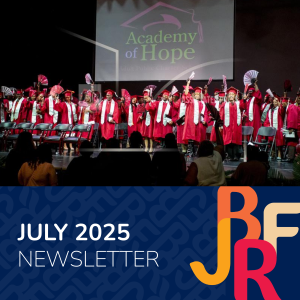
Adriane Herbert’s journey with Academy of Hope shows that growth doesn’t stop at graduation. After earning her diploma in 2018, she returned in 2026 through Hope Forward seeking greater stability, clarity, and direction. Through coaching, skills-building, and community, Adriane has strengthened her confidence and expanded her abilities. Her story reflects the value of continued support as people’s goals and circumstances evolve. Through JBRF’s partnership with AoH, we are proud to help create pathways for lasting growth and opportunity.

At 75, Phil Pannell continues to demonstrate that leadership and learning have no age limit.
After more than four decades of community advocacy in Washington, D.C., he took a sabbatical to attend Harvard Kennedy School’s Senior Executive Fellows program.
The experience expanded his perspective and connected him with leaders tackling similar challenges across communities.
One of those connections inspired a new effort to bring the “Boston Miracle” approach to Washington, D.C., to address youth violence.
For Phil, the fellowship was a reminder that meaningful leadership is built through lifelong learning, relationships, and action.

In Washington, D.C., community-led organizations are helping young people overcome barriers to opportunity through mentorship, support, and healing-centered engagement. One such leader is Tia Bell, founder of The T.R.I.G.G.E.R. Project, whose work is deeply rooted in her lived experience with gun violence. Through programs like TRIGGER University, the organization has empowered more than 500 youth prevention leaders and reached thousands across the city. By combining mentorship, workforce development, and leadership training, The T.R.I.G.G.E.R. Project creates pathways for young people to thrive. JBRF is proud to support this work through trust-based philanthropy and leadership development.

Nonprofits are essential to the wellbeing of communities across the country.
Yet many organizations are facing growing demand, funding uncertainty, and leadership burnout.
For Black-led nonprofits, these challenges are often even greater.
Sustainable impact requires investment in leadership, governance, and organizational capacity.
When nonprofits are strengthened, communities are stronger too.

For Lecester Johnson, access to education is more than a pathway—it’s a lever for stability, mobility, and long-term opportunity.
East of the Anacostia River, that work is critical for adults navigating systemic barriers.
Through her leadership at Academy of Hope, Johnson has built pathways that connect education to real economic opportunity.
Her approach recognizes that adult learners are balancing work, family, and financial pressures.
Because when education is accessible, its impact extends far beyond the classroom.

Women’s history in Washington, D.C. is actively shaped by Black women leading with purpose across every sector of the city.
Their work extends from boardrooms to neighborhoods, building systems of care, opportunity, and equity rooted in lived experience.
This legacy is grounded in pioneers like Mary McLeod Bethune and Dorothy Height, whose leadership reshaped national movements.
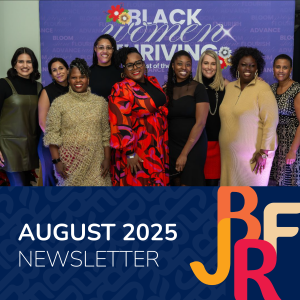
Today, initiatives like Black Women Thriving East of the River continue that work through health, workforce, and community support.
Together, these leaders are not only preserving history but actively building stronger, more just systems for future generations.